
Spot the correct control inputs.
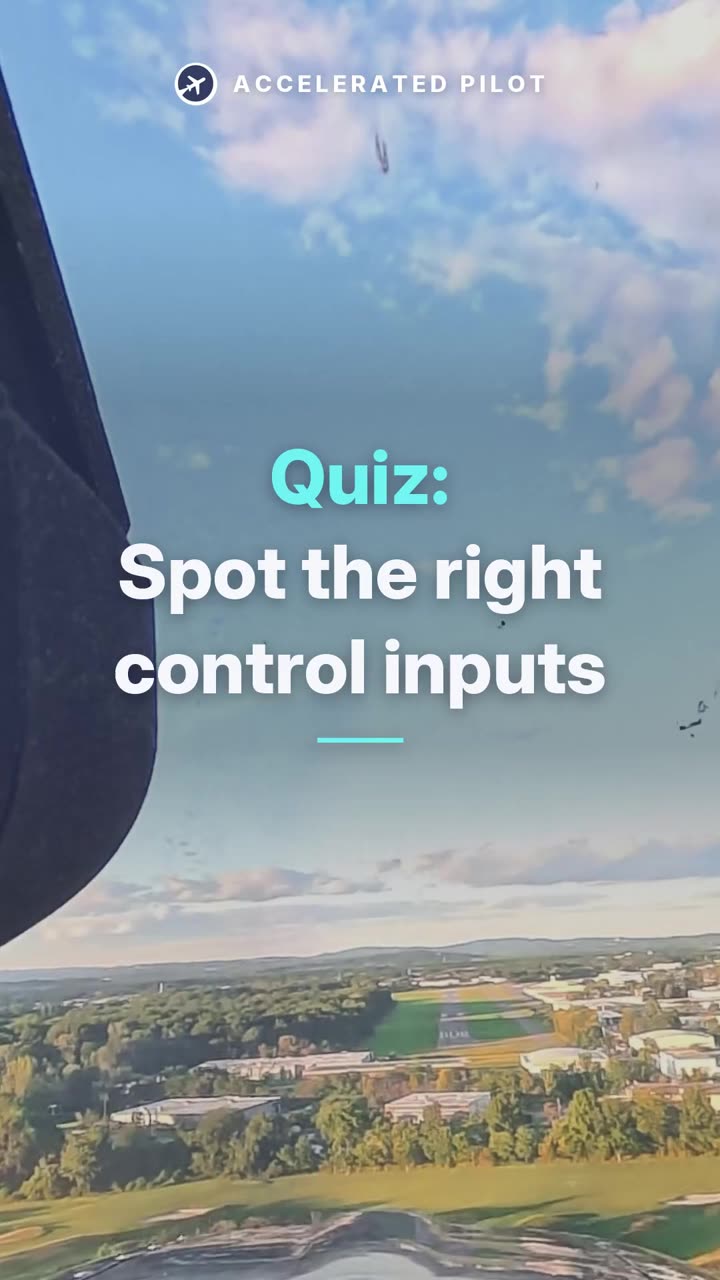
Tower has cleared you to land runway 4. Use the METAR to determine where the wind is coming from. Then answer: which control inputs do you hold in the flare?
Pick an answer. You can try as many as you like.
Read the full explanation
C. Left aileron, right rudder
Find the wind
The METAR reads 33010G18KT: wind from 330 degrees at 10 knots, gusting 18. Runway 4 points roughly northeast, about 040. Overlay the wind direction over the runway and you'll see you have a left crosswind.
One catch: a METAR reports wind from true north, but runway numbers are magnetic. Caldwell has about 13 degrees of west variation, so 330 true is about 343 magnetic. That puts the wind roughly 60 degrees left of the runway.
Hold the sideslip
In the flare, you want the airplane's path and its nose both lined up with the centerline. Left aileron lowers the upwind wing, and that bank stops the wind from drifting you to the right. Bank alone would turn the airplane left, so right rudder aligns the nose with the runway. Those crossed controls are the wing-low sideslip. The left main wheel touches down first, then the right.
Crabbing on final
Plenty of pilots fly final in a crab, with the nose turned into the wind and the wings level. That works on the approach, but the crab has to come out before touchdown. Otherwise the airplane lands moving sideways and puts a side load on the landing gear. Switching to the sideslip on final gives you time to experiment with the correct control inputs before it's time to flare.
How much input to hold
As you slow in the flare, the controls get less effective, so it takes more aileron and more rudder to hold the same slip. On a gusty day, don't be shy about adding more control inputs, and keep holding it through rollout.
The gusts
The gusts push the crosswind component close to the 172's maximum demonstrated crosswind of 15 knots. Demonstrated crosswind isn't a limitation, but it's a good reason to check your personal limits before each flight.
References
- Airplane Flying Handbook (FAA-H-8083-3C), Chapter 9: Approaches and Landings PDFSee "Crosswind Approach and Landing."
Share your thoughts / Suggest a quiz
Tell us what you thought of this quiz, or suggest a topic for a future one.
Fly the syllabus at your own pace. Practice in VR and impress your flight instructor with how fast you improve.