
When do you start the flare?
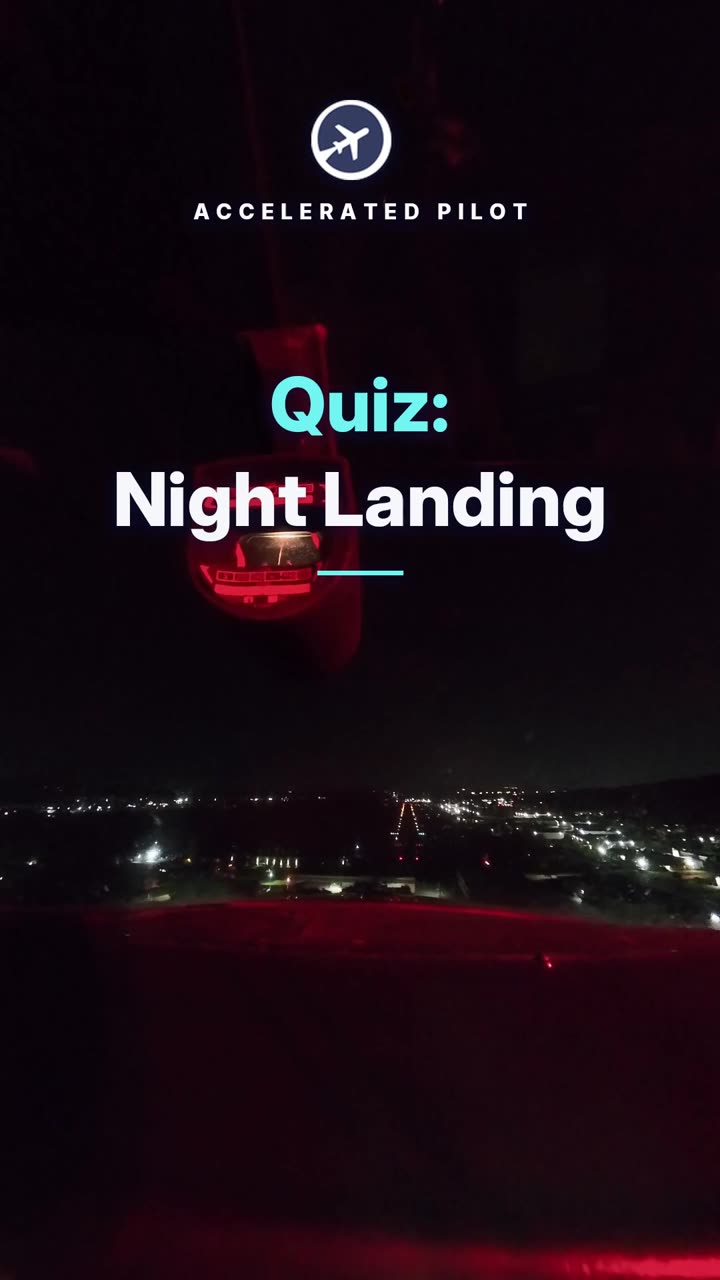
Short final at night, landing light on. When do you start the flare?
Pick an answer. You can try as many as you like.
Read the full explanation
B. When you can see tire marks
The handbook's cue
The Airplane Flying Handbook (Chapter 11, Night Operations) says to continue a constant approach descent until the landing light reflects off the runway and the tire marks are clearly visible, then start the round-out. Tire marks work as a cue because you can't make them out until you're down at round-out height.
Why the other cues fail
At night, inexperienced pilots tend to round out too high. Crossing the threshold lights, you're still well above round-out height. The altimeter isn't precise enough to flare at 20 feet, and the stall warning horn reports angle of attack, not height, so it can sound just as easily at 200 feet.
Without a landing light
If the landing light is out, the handbook gives a different cue: start the round-out when the runway lights at the far end appear to rise above the airplane's nose. This scenario has the landing light on, so the tire marks are there to use.
Where to look
Don't fixate on the lit patch just ahead of the airplane. That's how you end up ballooning. The tire marks tell you when to start the round-out, and during it your eyes go down the runway, the same as in daytime.
References
- Airplane Flying Handbook (FAA-H-8083-3C), Chapter 11: Night Operations PDFSee "Approaches and Landings."
Share your thoughts / Suggest a quiz
Tell us what you thought of this quiz, or suggest a topic for a future one.


Fly the syllabus at your own pace. Practice in VR and impress your flight instructor with how fast you improve.