
Is this a legal VFR cruising altitude?
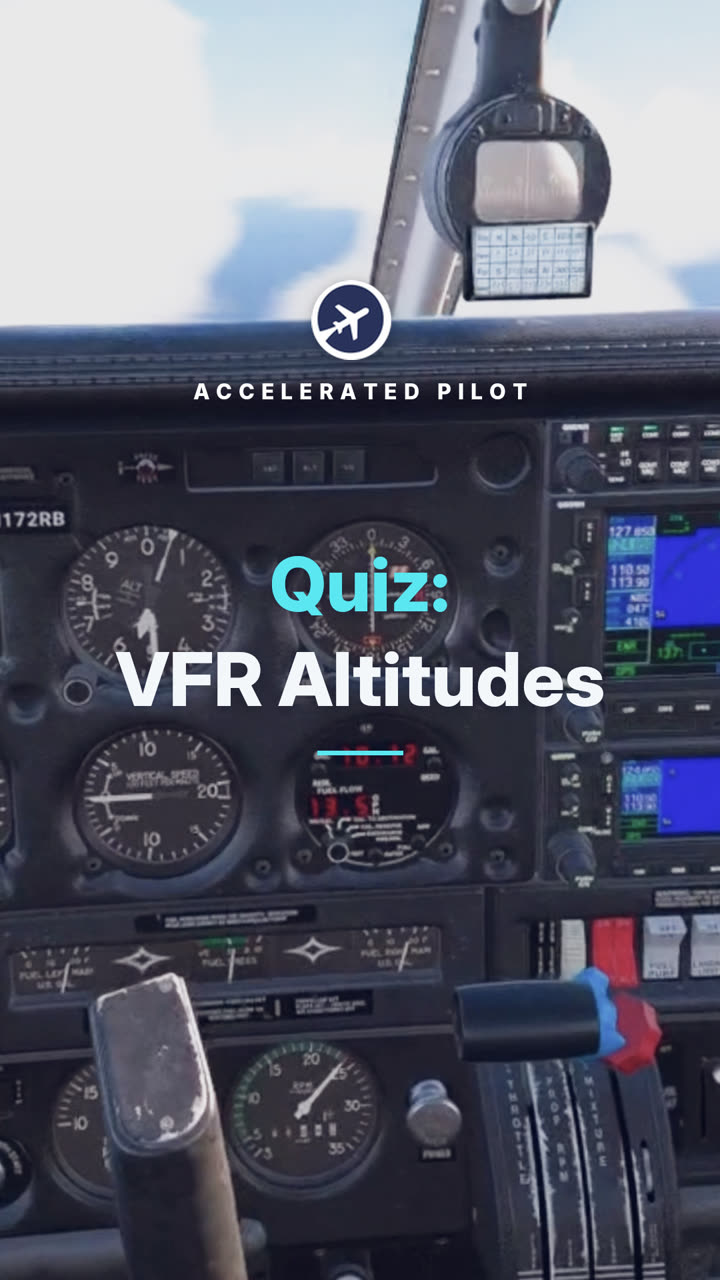
You're cruising VFR, 1 mile offshore, just east of Cape May, NJ. No flight following. You're at 5,500, heading 170. Is this a legal VFR cruising altitude?
Pick an answer. You can try as many as you like.
Read the full explanation
B. No, should be even +500
The rule
Once we're more than 3,000 feet AGL (above ground level), FAR 91.159 sets the VFR cruising altitude by magnetic course:
- Magnetic course 0° to 179°: odd thousands plus 500 (3,500, 5,500, 7,500, ...).
- Magnetic course 180° to 359°: even thousands plus 500 (4,500, 6,500, 8,500, ...).
The rule doesn't apply while turning, while in a holding pattern of 2 minutes or less, or when ATC authorizes a different altitude.
Heading or course
The DG and the magnetic compass both show a heading of about 170°. That's the 0° to 179° half of the rule, so 5,500 looks legal. But the rule is written around magnetic course, the path you're flying over the ground. The wind was from 090, which called for a 17° crab to the left. Now look at the GPS. The ground track is 187°. That's the 180° to 359° half, so the legal choices are 4,500 or 6,500.
Why altitude AGL matters
The rule only applies more than 3,000 feet above the surface. We're 1 mile offshore, east of Cape May, so the surface is sea level and 5,500 on the altimeter is also 5,500 feet AGL.
Why not a plain thousand
Plain thousands (5,000, 6,000) are IFR cruising altitudes under FAR 91.179. VFR traffic adds 500 feet, which keeps VFR and IFR traffic flying the same direction 500 feet apart.
References
- 14 CFR 91.159 (eCFR)VFR cruising altitude or flight level.
- 14 CFR 91.179 (eCFR)IFR cruising altitude or flight level.
Share your thoughts / Suggest a quiz
Tell us what you thought of this quiz, or suggest a topic for a future one.

Fly the syllabus at your own pace. Practice in VR and impress your flight instructor with how fast you improve.